I thought the TED talk went pretty well. We were able to go over everything that we had planned to talk about. There weren't any mistakes that happened during our presentation because we had rehearsed it so many times before. Preparing for the talk took a lot of thinking because we had a lot of slides before and soon realized that the slides weren't driving the actual presentation but it was what we were teaching the whole class. The slides were supposed to just guide us along so we decided to cut out many slides. We wanted to display our infographics and have as few words in each slide as possible. Giving the talk wasn't as bad because I don't tend to get nervous speaking in public but I could definitely fidget less with my hands possibly enunciate my words a little more. I have grown a long way with public speaking because I tend to talk really fast during presentations and sometimes I can't pronounce words when I get nervous speaking. I would give myself an A because I met almost all the requirements on the rubric.Overall, it was really interesting listening to other presentations because every single presentation was unique in its own way. I could never predict what topics I would be hearing about that day. The whole 20 Time project was fairly interesting and really allowed me to explore a topic that I normally wouldn't have time to go into depth on. It really allows us to continue to explore our passions and possibly learn something from it.
Tuesday, June 6, 2017

Thursday, May 25, 2017
20 Time Reflection
Initially, Caroline saw this topic pop up randomly in a Snapchat video while we were struggling to pick a topic for 20 time. Water management within California is actually a serious issue that people should be aware of and we wanted to learn more about this topic. Our goal was to create a website that had many aspects to it that would educate others regarding the how we use water within our own state. We thought that we would be able to have a video that would include actual experts regarding this topic as well as input from others around this area. The basic ideas to our 20 time project initially is in Blog Post 1.
We hit many roadblocks along the way because we thought we could do so many different things within a short amount of time. There were many times where we had to reevaluate what we were doing and see if there was a different path we could take. From the website making, we learned that it is extremely tedious and way too hard to maneuver around and actually get work done. We decided to make an infographic instead. This would combine all the important information into a single page and get the message across without being too boring. Also, as we neared the end of the project, we realized that we had not enough time to film and edit a video which also contributed to the infographic idea.
From this project, I learned more about our water usage and management within my own state considering we suffered through such a long period of it just recently. Also, I was able to read more about specific But for myself, this project was another test of my time management skills. I have struggled with projects that span a long time because I like to push it until the very end. While this project was ongoing, I had another project that was similar and I procrastinated on it and the end result was not the best I could do. This really showed me that for this project I should pace myself to ensure the best result. Time management is so important and will impact me for the rest of my life and I need to change how I manage my time so life won't always be so rushed.
If I had the chance to do this project again, I would probably pick a topic that had a lot more resources. The topic we picked was pretty specific and there weren't a plethora amount of information online and required a lot of searching. We might continue with this challenge because the amount of water we have on Earth is definite and people need to be aware of the choices they make every day.
I would give myself full credit because this project really allowed me to test my own time management skills and follow through with every goal. Although our goals may have shifted we dedicated time for research and put a lot of thought into the whole process. Our final product can be viewed here.
TED Talk Outline:
1. Why we chose this topic
2. specific facts regarding this topic
3. show the infographics and elaborate more
4. how everybody can help manage water
Thursday, May 11, 2017
Unit 8 Reflection
In this unit, we learned about the muscular system, synovial joint movements and also how the muscles really worked. The whole point of muscles are to move bones and fluid, maintain posture and body position, stabilize joints, and generates heat. Muscles also have properties like the ability to contract, extend, be elastic and get excited (receive and respond to stimuli) that allow the functions mentioned above to happen. Muscles are classified into prime mover, antagonist, synergist, and fixators. Prime movers cause the desired action, the antagonist relaxes when the prime mover contracts. Synergist helps the prime mover and fixators stabilize the origin of the prime mover. The naming of a muscle depends on the direction of fibers, size, shape, action, location, and # of attachments. We also learned about some of the muscles located throughout the body and what they allow the body to do.


There are many types of synovial joint movements but the main ones are gliding, angular, rotation and special movements. The joints that allow such movements to happen are planar, hinge, pivot, condyloid, saddle and ball and socket.
Muscles are composed of thousands of bundles of muscle fibers. Each fiber contains many myofibrils and within a myofibril is composed of many sarcomeres lined up next to each other. Myofibrils are what make muscle contractions possible. Sarcomeres are composed of 2 protein filaments actin (thin) and myosin (thick). When the muscle contracts, the myosin and actin filaments slide past each other and cause the muscle to shorten.

We also learned about 3 different types of muscle fibers. Slow Twitch Fibers are highly dependent on oxygen, slow to fatigue and is best suited for long durations like a marathon. Fast Twitch fibers are generally fast to fatigue, rely on glucose and are good for short bursts of activity like sprinting. Genetics and exercise can influence the ratio in the amounts of each fiber type but it mostly depends on genetics.
My New Year Goals have been going pretty smooth but it has not been easy. Senioritis is a real thing and it is such a struggle to find the energy to even do homework. I have definitely spent excess time doing unnecessary things but my grades have maintained pretty well throughout the whole semester. With my exercise routine, I have definitely tried to fit in more runs here and there but with the semester almost ending, I definitely have more time to exercise.
Muscles are composed of thousands of bundles of muscle fibers. Each fiber contains many myofibrils and within a myofibril is composed of many sarcomeres lined up next to each other. Myofibrils are what make muscle contractions possible. Sarcomeres are composed of 2 protein filaments actin (thin) and myosin (thick). When the muscle contracts, the myosin and actin filaments slide past each other and cause the muscle to shorten.
We also learned about 3 different types of muscle fibers. Slow Twitch Fibers are highly dependent on oxygen, slow to fatigue and is best suited for long durations like a marathon. Fast Twitch fibers are generally fast to fatigue, rely on glucose and are good for short bursts of activity like sprinting. Genetics and exercise can influence the ratio in the amounts of each fiber type but it mostly depends on genetics.
My New Year Goals have been going pretty smooth but it has not been easy. Senioritis is a real thing and it is such a struggle to find the energy to even do homework. I have definitely spent excess time doing unnecessary things but my grades have maintained pretty well throughout the whole semester. With my exercise routine, I have definitely tried to fit in more runs here and there but with the semester almost ending, I definitely have more time to exercise.
Friday, May 5, 2017
More Effective Joint
For this project, I tried to redesign part of the knee joint specifically the medial plica that lies within the knee joint to help prevent plica knee syndrome. I had to research and gather many different information about this syndrome since I barely knew this even existed. But once I read more about it and how it occurs, I thought about ways to redesign this specific area so there could be less pain or to remove the pain all together.
I am trying to redesign part of the knee joint. Plica is a fold within the lining of the knee joint. The inner lining of the knee joint is made up of synovial tissue and the folds found within the lining helps the knee joint move without restriction (Houston Methodist Leading Medicine). It is able to accomplish such task because the plica’s main function is to secrete synovial fluid (Singapore Sports and Orthopaedics Clinic).There are four plica folds found within the knee but only one of them causes trouble. The medial plica attaches to the bottom of the patella and helps connect it to the femur.
One of the reasons that causes plica knee syndrome is irritation caused by certain movements that require the repeated movement of bending and straightening of the knee like biking, running or stair climbing. Because of the irritation that occurs, the plica becomes much thicker and will rub against the thigh bone where it connects every time the kneecap moves. But, plica knee syndrome does not just appear on its’ own, it is often associated with other knee injuries or is triggered by a injury to the knee (PhysioWorks).
 |
| Before |
 |
| After |
The whole problem with plica knee syndrome is excessive inflammation that occurs and the goal is to reduce the amount of inflammation and pain at the site (Singapore Sports and Orthopaedics Clinic). The medial plica can be removed altogether but the whole idea of this assignment would not to remove the whole thing altogether because everything in the body plays an integral role in everyday functions. A way to reduce inflammation that occurs at the site of the medial plica is to increase synovial fluid around the area because the plica is to produce synovial fluid and a defect to it will change the amount of fluid present (U.S. National Library of Medicine National Institute of Health). Without the fluid present, the friction between synovial joints will increase and create more problems. The synovial cavity around the knee area could be increased slightly to have more synovial fluid within the area. Another solution to this problem is to decrease the size of the medial plica overall. The smaller the surface are that this membrane takes up, the chances of it rubbing onto the thighbone will be less and could help reduce inflammation at the knee.
I came up with the design after thinking about how to reduce inflammation within the plica and then realizing that the friction that occurs triggers the plica to become inflamed. With the increased amount of fluid present, there will be less friction that can happen when the medial plica moves with movement of the knee hopefully preventing inflammation at the site. But again, our bodies are built a certain way so a increased amount of synovial fluid could throw off the rest of the body. Also, reducing the size of the medial plica could prove to be disproportionate to the other three plica that are located within the knee joint. This could throw off the knee and could cause it to become weaker over time or become less flexible.
To minimize plica syndrome from reappearing, it is important to fix other knee injuries that could could potentially weaken the knee from further use. Also, It is important to strengthen the muscles around the knee as well as maintain flexibility in the knee area as we can’t physically change the anatomy of our bodies. Also, weight management may be considered to put less pressure on the joints within the lower body (PhysioWorks).
Overall, this assignment was pretty interesting as we got to learn more about the dysfunctions that happen to our bones, joints, or muscles. Also, it really required us to think out of the box and gather information about joints, muscle, and bones that we learned in class and apply it to something in real life. This assignment wasn’t like any other one where we just absorbed information but we had to rely on the information and display it in a different format.
Works Cited
Houston Methodist Leading Medicine. www.houstonmethodist.org/orthopedics/where-does-it-hurt/knee/plica-syndrome/.
Physio Works. physioworks.com.au/injuries-conditions-1/plica-syndrome.
“Plica Syndrome.” Orthopedic Associates, www.oamortho.com/pdf/plica-syndrome.pdf.
Singapore Sports and Orthopaedics Clinic. www.orthopaedics.com.sg/conditions/knee-pain/plica-syndrome.
U.S. National Library of Medicine National Institute of Health. www.ncbi.nlm.nih.gov/pmc/articles/PMC2684145/.
What Happens When You Stretch
Title: What Happens When You Stretch
Relate & Review:
When we stretch, there are many things that we can't physically see but goes on within our muscles. The stretching of muscle fibers starts with myofibrils which are made of many sarcomeres. Every sarcomere has thick and thin myofilaments that overlap every time the muscle contracts. This is why the muscle shortens every time it contracts. Proprioceptors are the main nerve endings found in joints, muscles, and tendons that help send signals to the central nervous system. The stretch reflex is triggered when the muscle is stretched and the muscle spindle notes the change in length. This reflex resists the change in length by making the muscle contract and this action helps to maintain muscle tone and protect the body from potential injury. If you hold a stretch for a long period of time, the muscle spindle gets used to the new length and stop signaling so you can gradually lengthen your muscles. As the muscle contracts, it reaches a point when it has gone beyond a certain threshold and needs to relax which triggers the lengthening reaction. This stop the muscle from contracting and causes it to relax. In this unit, we also learned about how one muscle relaxes when one contracts and that is called the reciprocal inhibition. A great example would be the biceps and the triceps.
Quotes:
1. "Hence when you stretch, the muscle fiber is pulled out to its full-length sarcomere by sarcomere, and then the connective tissue takes up the remaining slack. When this occurs, it helps to realign any disorganized fibers in the direction of the tension". It really points out how important stretching really is no matter how simple the action may be. Stretching helps place the fibers back in place so our muscle can go back to function normally.
2. "One of the reasons for holding a stretch for a prolonged period of time is that as you hold the muscle in a stretched position, the muscle spindle habituates and reduces its signaling". Basically the longer we hold a stretch, our muscle can actually stop contracting and allow the muscle to lengthen. This might be why dancers are often more flexible due to the amount of time they spend stretching.
3. "The basic function of the golgi tendon organ helps t protect the muscles, tendons, and ligaments from injury. The lengthening reaction is possible only because the signaling of golgi tendon organ to the spinal cord is powerful enough to overcome the signaling of the muscle spindles telling the muscle to contract". As our body is able to contract as it stretches, it can help prevent from overdoing it and causing potential injuries. The Lengthening Reaction help over the signal that tells the muscle to contract.
Relate & Review:
When we stretch, there are many things that we can't physically see but goes on within our muscles. The stretching of muscle fibers starts with myofibrils which are made of many sarcomeres. Every sarcomere has thick and thin myofilaments that overlap every time the muscle contracts. This is why the muscle shortens every time it contracts. Proprioceptors are the main nerve endings found in joints, muscles, and tendons that help send signals to the central nervous system. The stretch reflex is triggered when the muscle is stretched and the muscle spindle notes the change in length. This reflex resists the change in length by making the muscle contract and this action helps to maintain muscle tone and protect the body from potential injury. If you hold a stretch for a long period of time, the muscle spindle gets used to the new length and stop signaling so you can gradually lengthen your muscles. As the muscle contracts, it reaches a point when it has gone beyond a certain threshold and needs to relax which triggers the lengthening reaction. This stop the muscle from contracting and causes it to relax. In this unit, we also learned about how one muscle relaxes when one contracts and that is called the reciprocal inhibition. A great example would be the biceps and the triceps.
Quotes:
1. "Hence when you stretch, the muscle fiber is pulled out to its full-length sarcomere by sarcomere, and then the connective tissue takes up the remaining slack. When this occurs, it helps to realign any disorganized fibers in the direction of the tension". It really points out how important stretching really is no matter how simple the action may be. Stretching helps place the fibers back in place so our muscle can go back to function normally.
2. "One of the reasons for holding a stretch for a prolonged period of time is that as you hold the muscle in a stretched position, the muscle spindle habituates and reduces its signaling". Basically the longer we hold a stretch, our muscle can actually stop contracting and allow the muscle to lengthen. This might be why dancers are often more flexible due to the amount of time they spend stretching.
3. "The basic function of the golgi tendon organ helps t protect the muscles, tendons, and ligaments from injury. The lengthening reaction is possible only because the signaling of golgi tendon organ to the spinal cord is powerful enough to overcome the signaling of the muscle spindles telling the muscle to contract". As our body is able to contract as it stretches, it can help prevent from overdoing it and causing potential injuries. The Lengthening Reaction help over the signal that tells the muscle to contract.
Wednesday, May 3, 2017
Chicken Muscle Dissection
 In the Chicken Dissection Lab, we took the skin off the whole chicken and cut along the chicken's breast. There we identified the pectoralis major which humans use in the bench press. We also identified the pectoralis minor which lays directly beneath the pectoralis major.
 Afterward, we identified the trapezius and latissimus dorsi which is located in the chicken's upper back. The trapezius runs perpendicular from the backbone to the shoulder but are split into two in humans. The part running up the neck help shrugs the shoulder while the part along the back pulls the shoulders back. The Lattisimus Dorsi help extends the arm and runs from the spine into the armpit.
 Then, we removed one of the chicken's wing from the body. We located the deltoid which is the muscle on top of the shoulder for both birds and humans. The biceps brachii and triceps humeralis were pretty easy to identify as it is rather similar to muscles on a human. We then extended the wing where we identified the flexor carpi ulnaris and brachioradialis.
Next, we removed the thigh from the rest of the chicken and found the sartorius, iliotibialis, biceps femoris, semimembranosus, semitendinosus, and quadriceps femoris.
Then, we looked at the drumstick where we identified the gastrocnemius, peroneus longus and tibialis anterior.


Pectoralis major: breast muscles of the bird, pull the wing ventrally which powers flight
Pectoralis minor: lifts the wings dorsally, which is the recovery stroke of the wing in flight, in humans this pulls the shoulder down & forward.
Trapezius: these muscles run perpendicular from the backbone to the shoulder of the bird and help pull the shoulder back
Latissimus dorsi: these muscles run from the spine into the wing or arm pit and attach to the posterior side of the humerus, extend/ pull the wing/ arm
Deltoid: raises the upper arm/wing
Biceps brachii: flexes the wing/arm, muscle on cranial side of upper wing/ arm
Triceps humeralis: straightens the wing or arm, on inferior side of upper wing/ arm
Flexor carpi ulnaris: largest muscle on posterior side of lower wing that flexes the hand
Brachioradialls: largest muscle on superior side of lower wing that pulls the hand back
Sartorius: muscles run down the front edge of the thigh from the ilium to the knee, flexes thigh & allows legs crossing
Iliotibialis: covers the lateral side of the thigh in birds and extends the thigh and flexes the leg
Biceps femoris: makes up hamstring group, flexes leg
Semimembranosus: inferior and medial to biceps femoris and extends the thigh
Semitendinosus: anterior and medial to semimembranosus on the inside of the thigh and extends the thigh
Quadriceps femoris: flexes the thigh and extends the lower leg
Gastrocnemius: primary muscle of dorsal and medial sides of the drumstick, helps extend the foot & flexes the lower leg
Peroneus longus: primary superficial muscle on the lateral side of drumstick, extends the foot
Tibialis anterior: flexes the foot
Muscles are the ones doing the actual work when our body is in motion. They surround the bone which helps give us support and gives our body shape. Tendons are what attach muscle to bone. For example, the bicep and tricep are attached to the humerus and when the bicep contracts, the tendons help pull on the bone which causes the muscle to contract and shorten. The tendon of insertion moves when the muscle moves while the tendon of the origin side makes sure that the muscle stays attached to the bone during movement. Pectoralis minor: lifts the wings dorsally, which is the recovery stroke of the wing in flight, in humans this pulls the shoulder down & forward.
Trapezius: these muscles run perpendicular from the backbone to the shoulder of the bird and help pull the shoulder back
Latissimus dorsi: these muscles run from the spine into the wing or arm pit and attach to the posterior side of the humerus, extend/ pull the wing/ arm
Deltoid: raises the upper arm/wing
Biceps brachii: flexes the wing/arm, muscle on cranial side of upper wing/ arm
Triceps humeralis: straightens the wing or arm, on inferior side of upper wing/ arm
Flexor carpi ulnaris: largest muscle on posterior side of lower wing that flexes the hand
Brachioradialls: largest muscle on superior side of lower wing that pulls the hand back
Sartorius: muscles run down the front edge of the thigh from the ilium to the knee, flexes thigh & allows legs crossing
Iliotibialis: covers the lateral side of the thigh in birds and extends the thigh and flexes the leg
Biceps femoris: makes up hamstring group, flexes leg
Semimembranosus: inferior and medial to biceps femoris and extends the thigh
Semitendinosus: anterior and medial to semimembranosus on the inside of the thigh and extends the thigh
Quadriceps femoris: flexes the thigh and extends the lower leg
Gastrocnemius: primary muscle of dorsal and medial sides of the drumstick, helps extend the foot & flexes the lower leg
Peroneus longus: primary superficial muscle on the lateral side of drumstick, extends the foot
Tibialis anterior: flexes the foot
Thursday, April 13, 2017
Unit 7 Reflection
 In this unit, we learned about our skeletal system, the different bones, disorders within the skeletal system, joints and bone fractures and repair. There were so many different topics that were pretty interesting and amazed me how complex the skeletal system actually is. The skeletal system is divided into two parts, axial and appendicular. The axial is the main parts like skull, vertebrae, and ribcage. The appendicular is just the appendages on the body. It is surprising that our body has 206 bones and is composed of compact or spongy bone. Compact bone is much stronger than spongy bone. Also, bones are classified by their shape which includes long, short, irregular and flat. Long bones are like the femur or humerus, short bones are like carpals and tarsal, flat bones include the skull and ribs, irregular bones include the vertebrae and hips.
  |
| Owl Pellet |
With each system, they have their functions as well as disorders. Skeletal system disorders include arthritis, osteoporosis, scoliosis, kyphosis, lordosis, and rickets. Most commonly heard are arthritis, osteoporosis, and scoliosis. Kyphosis is when there is an excessive curve of the thoracic vertebrae and you may develop a hump. Lordosis is the excess curvature of the lumbar spine and a forward tilt of the pelvis. It is caused bydifferent thickness of intervertebral discs. Rickets is softening and weakening of bones and is caused by extreme and prolonged vitamin D deficiency.
Another thing I found interesting is that our body is constantly tearing down and then rebuilding our bones. Calcium is necessary to help our body overall and is key in building and repairing teeth & bones. An important thing is that without Vitamin D, calcium can't be properly absorbed and many people forget and just consume huge amount of calcium which doesn't have much of an effect. Osteoprogenitor cells are dividing cells that develop into osteoblasts which are found on the surface of bones. They are also known as bone- building cells and help develop into osteocytes or mature bone cell. Osteoclasts are the opposite and break down bone tissue. Bone remodeling is important so injured bones can be replaced but also help maintain homeostasis of blood calcium levels and maintains the skeleton.
Our skeletal system has the ability to maintain itself but when it comes to bone fractures it has a complex system to help repair it. There are many different types of bone fractures from a simple one to ones where the bone can actually penetrate the skin. But once the bone fractures, repair only starts when the ends of the bone make contact with each other. a hematoma forms at the site and then it turns into a procallus. Fibroblasts, chondroblasts, and osteoblasts will then arrive. By the end of a week, cartilage and bone will appear and then a osseuous callus which acts like a splint will occupy the area. Once the osseous callus has undergone remodeling to restore the bone, the injured bone is healed. It amazes me how the human body has such a unique system to help repair itself.
I think I am slowly but surely progressing toward my New Year's Goal. I've hit a few setbacks this month by being sick which made my lose my motivation. But I am slowly getting there and hope to accomplish both of my goals by the end.
Friday, March 31, 2017
Owl Pellet Lab
In this lab, we dissected an owl pellet to determine what type of animal the owl had consumed. We broke down the owl pellet and separated the fur from the bones and based off of the bone structures, we figured out what type of animal the owl had ingested.

The organism we observed was a vole. We were able to come to a conclusion based on the skull & lower jaw length. The length of the skull was about 20mm and the lower jaw was about 18 mm. Both were pretty close in length in the diagram for a vole. Another giveaway was the space between the teeth and the molars in the mouth.
The anatomy of this rodent is rather similar to one of a human as some if its basic bones matched up. Some of the bones included the skull, femur as well as tibia and fibula.
Also, the vole and humans body have similar structure as it went from the skull all the way down to the legs. We also noticed some bones that were the ball and socket join which is similar to humans. These connect to the hip and allows movement.
An obvious difference between the vole and humans is the skull and the jaw. Our skull is not as long and sharp as the vole and our teeth are more evenly spaced apart. The vole had a gap between the molars and the rest of the teeth. Also, voles has tails which make up for the many tiny bones we found. Most of the tiny bones were broken down and pretty indistinguishable. Lastly, the bones of a vole is way skinnier and tinier in comparison to human bones.


 |
| Lower Jaw |
 |
| Skull |
 |
| Bones |
Also, the vole and humans body have similar structure as it went from the skull all the way down to the legs. We also noticed some bones that were the ball and socket join which is similar to humans. These connect to the hip and allows movement.
An obvious difference between the vole and humans is the skull and the jaw. Our skull is not as long and sharp as the vole and our teeth are more evenly spaced apart. The vole had a gap between the molars and the rest of the teeth. Also, voles has tails which make up for the many tiny bones we found. Most of the tiny bones were broken down and pretty indistinguishable. Lastly, the bones of a vole is way skinnier and tinier in comparison to human bones.

Thursday, March 16, 2017
Unit 6 Reflection
In this unit, we learned about our brains, senses, nervous systems and how neurons work, and also Central & Peripheral Nervous System Disorders.
The three main parts to our brain are the cerebellum, spinal cord and cerebrum. The left and right brain is connected by the corpus callosum. The left side of our brain mostly deals with language, math reasoning, and logic. While the right side is for facial recognition and picture context. The cerebral cortex contains multiple lobes and controls the high function like thought and action. There is a frontal lobe that deals with speaking & muscle movements, making plans and judgments. The parietal lobes include the sensory cortex. The occipital lobe receive visual info from the opposite visual field. And the temporal lobes include auditory areas and receive info from the opposite ear. In the article "How to Become a 'Superager'" they found that critical brain regions increase in activity whenever people perform difficult tasks. Whether it is physical or mental pushing past the discomfort of exertion means that we are building muscle and discipline. It is also good to take on things that are tough mentally or physically rather than avoid it. We did a brain lab with a sheep's brain and that really helped me visualize the different parts of the brain. Being able to physically hold and pin each part of the brain allowed me to see how compact the brain really is and how essential each part is.
In the article "Fit Body, Fit Brain and Other Fitness Trends" it mentioned in order to live lon, age well and maintain a. sharp brain we must be physically active. Exercise in any form can increase the number of. new neurons and help sharpen thinking skills and mood and helps reduce the fraying and shortening of our telomeres.
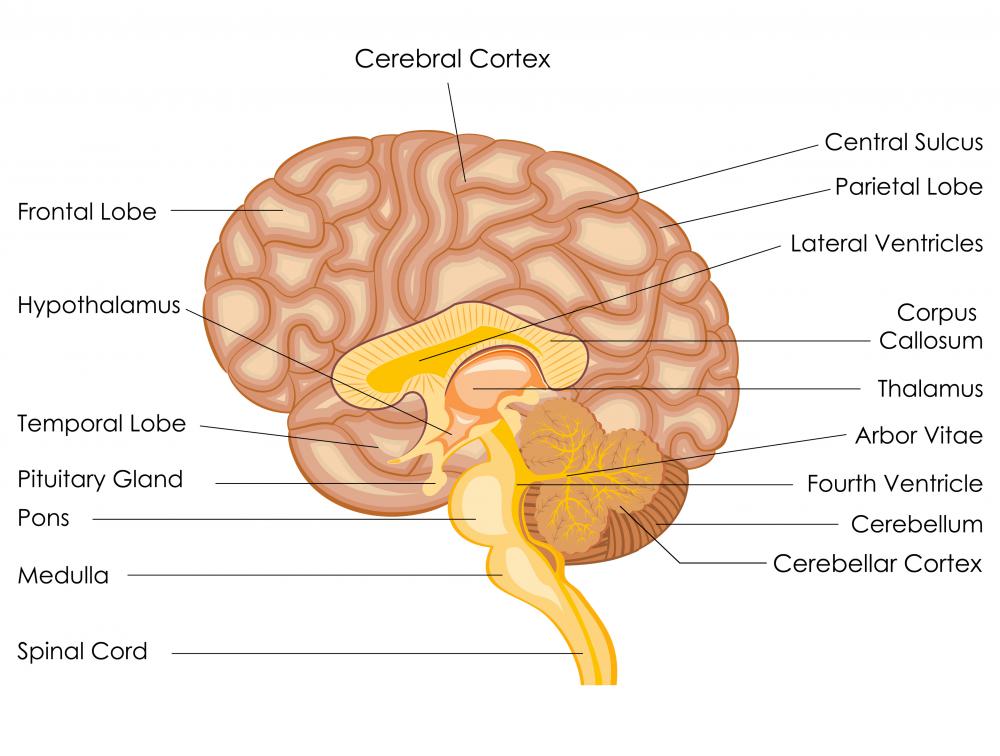
The five different senses are vision, hearing, touch, taste and smell. Senses receive info directly from our surrounding and deliver it to the Central Nervous System. All the different senses involve receptors like thermoreceptors which deals with temperature, nociceptors which deals with pain, photoreceptors deals with light rays, chemoreceptors deal with chemicals and mechanoreceptors deal with movement & pressure. Special senses have their own organ and somatic is just the body. Sensation is the process where the CNS receives the input from the environment via sensory neurons. Perception is the process by which the brain interprets & organizes sensory info to dictate proper motor response.
We did a lab with a sheep eye which helped me visualize the different parts of the eye. It is so interesting being able to look beyond the lens and see how our vision works. Being nearsighted, it is fascinating to know that the image lands in front of the retina and how contacts can help change this and make my vision less blurry. There are three parts to the ear, external middle and inner.They all help direct sound waves into the ear canal and vibrates onto the cochlea depending on frequency. A Choclear implant helps people hear by bypassing damaged regions of the ear and directly stimulating the auditory nerve. I have heard of this implant working on people who have hard of hearing and this really allows them to hear more clearly and is pretty astonishing. Smelling starts with chemicals dissolved in the air, enters the nose which stimulates the olfactory hairs and sends the message along the olfactory nerve to the brain. Taste starts from taste receptors on taste cells that are found within a taste bud and goes all the way to the basal end of the taste cell to form a synapse with a primary sensory neuron.
The central nervous system deals with the brain and spinal cord while the peripheral nervous system includes all the nerves. Within the peripheral nervous system is the somatic and autonomic nervous system. The somatic is divided into sympathetic which is triggered by the fight or flight response and the parasympathetic counterbalances the effect of the sympathetic. The autonomic nervous system helps regulate essential parts of the body but is automatic so we don't have to think about it. The neuron is highly specialized to transmit messages from one part of the body to another. The dendrites receive the impulses and move it toward the cell body. The axons conduct the impulses away from the cell body. The synaptic cleft helps to separate the axons & dendrite from each other. At the end of the neuron is the axon terminal which passes the signal from one neuron to the next. There are many neurons located throughout the body and they all specialize in different jobs.

With every system in the body, there are dysfunctions that can happen to it. A few common CNS disorders include meningitis, cerebral palsy, epilepsy, ALS, Parkinson's, and Alzheimer's. PNS disorders include shingles, carpal tunnel, bell's palsy and neuralgia.
We also learned about addiction and how it actually is a disease despite how society views of it. Addiction is the dysfunction of the brain itself but the treatment for it is not the same as a disease of some other body part. The brain structure, pathways, and chemicals change as a result of addiction which can be triggered by anything.
I found this unit easier to understand compared to the last one because the different concepts were easier to grasp.
In my New Year Goals , I only set two goals for myself which I have been keeping up pretty well with. I have been starting my homework at an earlier time and am sleeping earlier as a result. With my fitness goal, I have been consistently working out 3-5 times a week and have been trying to switch up my workouts. I have recently started running with my friend at least once a week instead of always running on the treadmill all the time. This pushes me to continue working toward this goal and help me stay motivated.
Wednesday, March 15, 2017
Reflex Lab
In this lab, we tested how our reflexes would react to different stimulus. Reflexes are rapid, predictable and involuntary responses to stimuli. There are somatic and autonomic reflexes. Somatic stimulates skeletal muscles while autonomic regulate smooth muscle and control much more organs.
Photopupillary Reflex
We shined a flashlight into our partner's eyes after they kept them shut for a few minutes. The sudden influx of light caused the reflex to contract the iris which caused the pupil to constrict. We observed the pupil constricting slightly when the flashlight was shone directly on the eye. I think humans have this reflex so we can see better when we transition from different environments. This reflex controls the amount of light that enters the eye by constricting the pupils in bright situations and dilating in the dark.
Knee Jerk Reflex
The knee jerk reflex is typically located right below the knee and when struck with a reflex hammer or hand the leg will kick out significantly. We noted this during the lab and got the reflex when we found where the reflex was exactly located. I think the knee jerk reflex helps us maintain our balance. When we lose our balance, this reflex allows the quads to contract and regain our balance.
Blink Reflex
The blink reflex allows us to blink when something is thrown directly at our eyes. We observed this when throwing a cotton ball at my partner's face and they blinked every single time. Even though there was a clear barrier right in front of them, they still blinked. I think we have this reflex to protect our eyes and to prevent things from getting into it like the cotton ball in this activity.
Babe, what's your sign?
We took a pen and dragged it across the foot from the heel all the way to the base of the big toe. The toes are supposed to flex and move closer together. We both noticed that this happened in our feet when we dragged the pen across. I think this occurs to prevent further damage to the base of the foot in case of danger. I think it can also help test for neurological dysfunctions.
How Fast Are You?
In this activity, we measure our response time to something we see. We took a ruler and dropped it unexpectedly for each other to catch. We noted the distance when the person caught the ruler and then converted it into time. Then, we did the same activity but this time the other person was not so focused on catching the ruler because they had to be texting. In the end, the results showed that while texting, our response time increased. Mine increased by 0.084 seconds which is a lot because this correlates with texting and driving. Our reaction time is reduced so we are less likely respond in a timely matter which can be extremely dangerous. Also, men have a faster reaction time compared to women because they have more white matter in their brains.

Photopupillary Reflex
We shined a flashlight into our partner's eyes after they kept them shut for a few minutes. The sudden influx of light caused the reflex to contract the iris which caused the pupil to constrict. We observed the pupil constricting slightly when the flashlight was shone directly on the eye. I think humans have this reflex so we can see better when we transition from different environments. This reflex controls the amount of light that enters the eye by constricting the pupils in bright situations and dilating in the dark.
Knee Jerk Reflex
The knee jerk reflex is typically located right below the knee and when struck with a reflex hammer or hand the leg will kick out significantly. We noted this during the lab and got the reflex when we found where the reflex was exactly located. I think the knee jerk reflex helps us maintain our balance. When we lose our balance, this reflex allows the quads to contract and regain our balance.
Blink Reflex
The blink reflex allows us to blink when something is thrown directly at our eyes. We observed this when throwing a cotton ball at my partner's face and they blinked every single time. Even though there was a clear barrier right in front of them, they still blinked. I think we have this reflex to protect our eyes and to prevent things from getting into it like the cotton ball in this activity.
Babe, what's your sign?
We took a pen and dragged it across the foot from the heel all the way to the base of the big toe. The toes are supposed to flex and move closer together. We both noticed that this happened in our feet when we dragged the pen across. I think this occurs to prevent further damage to the base of the foot in case of danger. I think it can also help test for neurological dysfunctions.
How Fast Are You?
In this activity, we measure our response time to something we see. We took a ruler and dropped it unexpectedly for each other to catch. We noted the distance when the person caught the ruler and then converted it into time. Then, we did the same activity but this time the other person was not so focused on catching the ruler because they had to be texting. In the end, the results showed that while texting, our response time increased. Mine increased by 0.084 seconds which is a lot because this correlates with texting and driving. Our reaction time is reduced so we are less likely respond in a timely matter which can be extremely dangerous. Also, men have a faster reaction time compared to women because they have more white matter in their brains.

Subscribe to:
Comments (Atom)